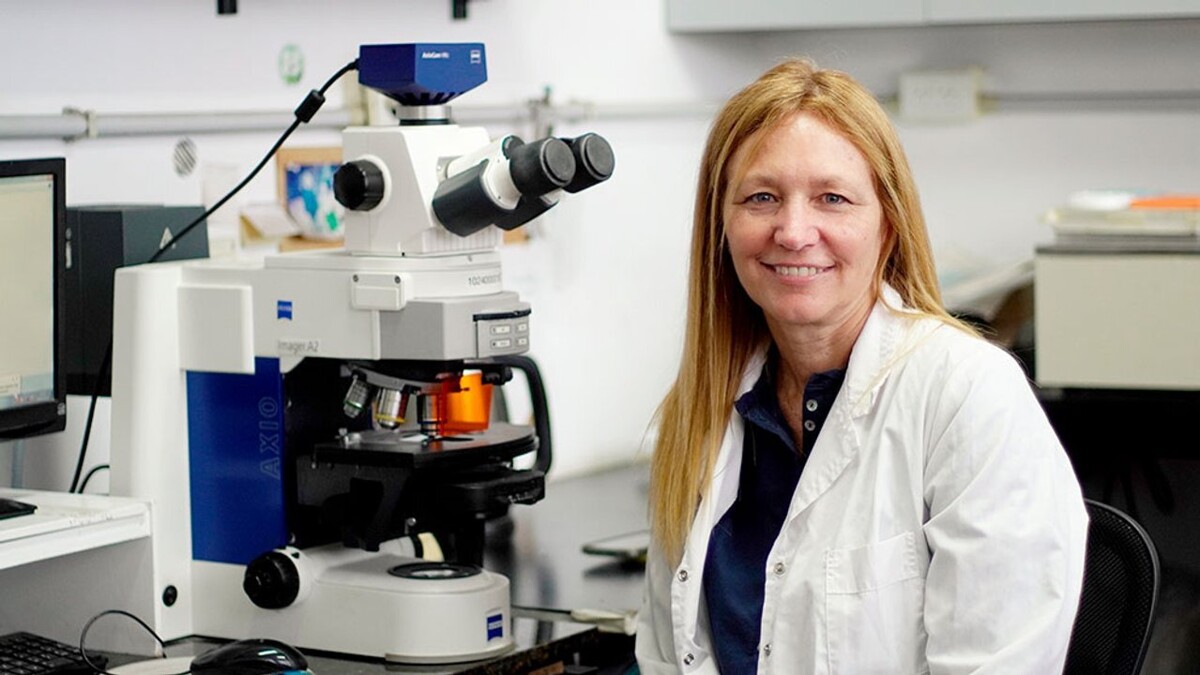
Biologist Gabriela Pagnussat, who works at the Institute of Biological Research (IIB), which is part of the National Council for Scientific and Technical Research (CONICET) and operates at the National University of Mar del Plata (UNMDP), was recently awarded for discovering a mechanism that allows plants to survive extreme heatwaves.
Pagnussat, 53, graduated from the aforementioned University of Mar del Plata, where she earned her first doctorate in sciences, while her second postdoctorate in molecular biology was completed at the University of California, Davis. She focused on uncovering the secrets of plants, and one of her first research projects, as a student, involved studying light-dark processes in rice plants.
Pagnussat's scientific calling began in high school: "It started with a genetics workshop I had in school, which fascinated me, and I said to myself, 'I want to study Biology.'"
"Plants are not like animals, which can escape from a stressful situation," the expert noted. She also pointed out that plants "are exposed to environments that are often terrible, and yet they grow, develop, survive, and need to adapt in the place where they are. For this reason, during their evolutionary path, they have developed biochemical and molecular strategies that allow them to survive attacks from the environment, both biological and physical, which gives them that plasticity and those multiple mechanisms from which we have so much to learn."
Pagnussat did her postdoctorate at the aforementioned University of California, and in 2009 she returned to the country thanks to the scientist repatriation program. It was then that she developed her line of research on plants at the IIB, in plant reproductive biology and also in the study of their molecular responses to the environment, which led her to discover the process of programmed cell death in plants in response to heat and to begin the project for which she has just been awarded.
After receiving the L'Oréal-UNESCO 2025 "For Women in Science" award in collaboration with CONICET, Pagnussat said it was "an honor to receive it" because Argentina has many talented women scientists. She recounted that she found out she had won the award before joining a work Zoom call, alone in her office.
For Pagnussat, her future dream is for what she discovered to be applied in all crops that suffer from heatwaves, in viticulture, tomato, wheat, intensive and extensive crops, and to solve the problem of crop losses due to exposure to extreme temperatures.
The award for which Pagnussat was honored was for finding a way for plants not to die from heat stress and, together with her team at the Institute of Biological Research (IIB, CONICET-UNMDP), designing a path to modify their genes and endow them with "memory of thermal stress," which means these plants are born acclimated to high temperatures.
"During my doctorate, I began to study plants and I was fascinated to discover their resilience, the plasticity they have."